Pinball Flipper Game Illustration: A Playful Tool for Creativity and Communication
The Pinball Flipper Game Illustration is more than just a visually engaging image—it's a concept that bridges creativity, communication, and conceptual thinking. Originally designed for a poster promoting a game theory conference, this dynamic visual has evolved into a versatile asset with applications far beyond its initial purpose. Its chaotic motion and unpredictable paths make it a compelling metaphor for decision-making, strategy, and the often-unpredictable nature of outcomes in both business and life.
Why This Illustration Stands Out
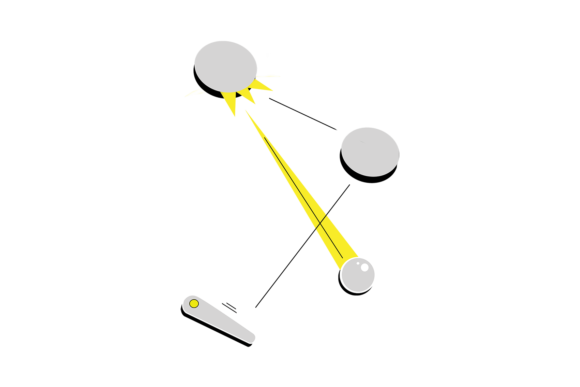
At first glance, the illustration captures attention with its energetic lines and vibrant motion. The flippers, ball, and bumpers suggest a sense of playfulness while simultaneously implying complexity and randomness. This duality makes it an ideal visual for representing scenarios where control is limited, yet strategy still plays a role. Whether you're a marketer crafting a campaign or an educator explaining probability, the Pinball Flipper Game Illustration can serve as a powerful visual anchor.
How It Supports Conceptual Thinking
One of the most valuable uses of this illustration lies in its ability to represent abstract ideas. For instance, game theory explores how decisions are made in competitive or cooperative environments. The pinball's unpredictable path mirrors the way small choices can lead to vastly different outcomes—perfect for illustrating strategic thinking in business, economics, or even personal development.
Professionals who need to explain complex systems—like project managers mapping out risk scenarios or educators teaching probability—can use this image to simplify complicated ideas. The illustration becomes a visual shortcut that conveys motion, chance, and interactivity without needing lengthy explanations.
Practical Applications Across Industries
While the Pinball Flipper Game Illustration was born from a game theory event, its adaptability makes it relevant across many fields. Here are a few ways different professionals can benefit:
- Marketers: Use the image to symbolize customer journeys, where each bounce represents a decision point or external influence.
- Designers: Incorporate the visual into branding materials for tech startups, innovation labs, or creative agencies to reflect forward motion and experimentation.
- Trainers and Educators: Illustrate the unpredictability of learning curves or the impact of small actions over time.
- Entrepreneurs: Represent the chaotic early stages of a startup, where outcomes are uncertain but momentum is key.
Enhancing Presentations and Visual Communication
In today's fast-paced world, visuals are essential for keeping audiences engaged. The Pinball Flipper Game Illustration can transform a standard presentation into a more dynamic experience. When used in slides or infographics, it can help emphasize the idea of movement, change, or branching paths.
For example, a business strategist presenting a growth plan might use the image to show how different market forces interact. A product designer explaining user experience flow could use it to highlight touchpoints and decision paths. The illustration’s playful nature also makes it ideal for lighter, more approachable content like blog posts or social media graphics.
Supporting Creativity and Problem-Solving
Creativity often thrives on constraints and unexpected connections. The Pinball Flipper Game Illustration can act as a source of inspiration when brainstorming solutions to complex problems. Its chaotic motion can symbolize the need for adaptability, encouraging teams to think outside linear frameworks.
Consider using the image in ideation sessions or collaborative workshops. It can serve as a reminder that while outcomes may be unpredictable, thoughtful design and strategy can guide the process toward favorable results. This mindset is especially valuable in fields like innovation management, UX design, or strategic planning.
When to Use—and When to Look Elsewhere
While the Pinball Flipper Game Illustration is versatile, it may not be the best fit for every situation. It works best when the message includes themes of movement, chance, or nonlinear progression. If your content requires a more controlled or structured visual—such as a step-by-step process or a formal flowchart—other illustrations may be more appropriate.
Additionally, audiences expecting highly technical or data-driven visuals might find the playful nature of the image less suitable. In those cases, pairing the illustration with more precise charts or diagrams can help maintain both clarity and engagement.
Who Benefits Most from This Visual
Creatives, strategists, educators, and communicators will find the most value in the Pinball Flipper Game Illustration. If your work involves explaining complex systems, encouraging innovation, or simplifying abstract concepts, this image can become a go-to visual asset.
For instance, a small business owner launching a new product might use the illustration to explain the unpredictable journey from ideation to market. A blogger writing about decision-making could use it to highlight how small choices lead to vastly different outcomes. Even freelance designers looking for a unique visual motif can integrate the image into client projects that require a sense of energy and motion.
Integrating the Illustration into Your Work
Successfully incorporating the Pinball Flipper Game Illustration into your content starts with understanding your audience and message. Here are a few tips to maximize its impact:
- Pair with storytelling: Use the image alongside narratives that emphasize unpredictability and strategy.
- Customize for context: Adjust colors or elements to match brand guidelines or thematic needs.
- Combine with data: Use alongside graphs or flowcharts to balance playfulness with structure.
- Test for clarity: Ensure the illustration enhances understanding rather than complicating it.
By aligning the image with your communication goals, you can make complex ideas more relatable and engaging.
Final Thoughts
The Pinball Flipper Game Illustration is more than a design element—it's a conceptual tool that can help professionals across industries communicate more effectively. Its ability to convey motion, chance, and complexity in a visually appealing way makes it a valuable asset for presentations, educational materials, marketing content, and more.
Whether you're explaining strategic decision-making, illustrating the chaos of startup growth, or simply adding visual interest to a blog post, this illustration can help bring your message to life. With thoughtful use, it becomes more than just an image—it becomes a bridge between abstract ideas and real-world understanding.