Exploring the Versatility of Game Controller Vector Graphics
Vector graphics have become a cornerstone of modern digital design, especially in the realm of gaming and interactive media. Among the many specialized assets available, the Game Controller Vector stands out as a flexible and powerful tool for designers, developers, and creators across industries. Whether you're designing a mobile app interface, a gaming website, or an educational module on game development, having access to high-quality, scalable vector assets like a game controller can significantly enhance both the aesthetic and functional value of your project.
Understanding Game Controller Vector Assets
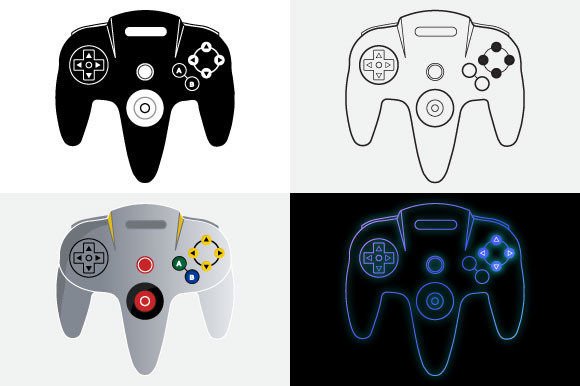
A Game Controller Vector is a digital illustration created using vector-based software such as Adobe Illustrator or Inkscape. Unlike raster images (like JPEGs or PNGs), vectors are resolution-independent, meaning they can be scaled to any size without losing clarity. This makes them ideal for use in a variety of contexts, from mobile UI elements to large-format prints.
When you acquire a Game Controller Vector package, you typically receive multiple file formats, including:
- AI files – Adobe Illustrator source files for deep customization.
- EPS files – Encapsulated PostScript files that are compatible with a wide range of design software.
- Editable layers – Each component of the controller (buttons, joysticks, triggers) is separated for easy manipulation.
This level of flexibility ensures that you're not just downloading a static image, but a fully customizable design asset that can be tailored to your specific needs.
Practical Applications Across Industries
The utility of a Game Controller Vector extends far beyond the gaming industry. Let's explore how different sectors can benefit from integrating this asset into their visual communication strategies.
1. User Interface (UI) and App Development
In app development, especially for gaming platforms or entertainment apps, intuitive iconography is essential. A Game Controller Vector can be used to create icons for game launchers, control panels, or settings menus. Since vectors are scalable, they maintain clarity across devices with varying screen resolutions.
For example, a mobile game developer might incorporate a stylized version of the controller into the app's main menu to guide users through gameplay controls. The ability to change colors and tweak shapes makes it easy to match the app's overall theme.
2. Educational Content and Tutorials
Educators and instructional designers can use Game Controller Vectors to create engaging visuals for game design courses or programming tutorials. These assets help illustrate complex concepts like input mapping, button functions, or joystick mechanics in a visually appealing and easy-to-understand format.
For instance, a lesson on how analog sticks translate to character movement can be greatly enhanced with a vector illustration that labels each part of the controller and shows directional input examples.
3. Marketing and Promotional Material
Marketing teams promoting a new game or gaming hardware can utilize Game Controller Vectors in banners, social media posts, and landing pages. These visuals can be customized to reflect the brand's color scheme and style, ensuring consistency across promotional materials.
Moreover, since the files are editable, marketers can easily swap out elements like button labels or logos to match specific campaigns or limited-time features.
4. Game Development and Prototyping
Game developers often use vector graphics during the prototyping phase. A Game Controller Vector can be used to mock up control schemes or UI overlays before final assets are created. This allows for rapid iteration and testing without the need for high-resolution textures or complex 3D modeling.
For example, during early gameplay testing, developers might overlay a vector controller graphic onto the screen to simulate the final control layout on different devices.
Advantages of Using Game Controller Vector Graphics
There are several compelling reasons to choose vector graphics over raster images when working with a Game Controller Vector. Let’s break down the key benefits:
Scalability Without Quality Loss
One of the most significant advantages of vector graphics is their ability to scale infinitely without any loss of quality. Whether you're designing for a smartphone screen or a billboard, your Game Controller Vector will look sharp and professional at any size.
Full Customization
Since each component of the vector graphic is editable, you can modify colors, shapes, and even add or remove elements as needed. This level of control is invaluable for aligning the asset with your project's visual identity.
For instance, if you're designing a retro-themed game, you can easily adjust the color palette and style of the controller to evoke a classic look.
Compatibility with Design Tools
With both AI and EPS formats included, the Game Controller Vector is compatible with a wide array of design software. Whether you're using Adobe Illustrator, CorelDRAW, or Inkscape, you can open and edit the file without compatibility issues.
Efficient File Sizes
Compared to high-resolution raster images, vector files tend to be smaller in size. This makes them ideal for web use, where faster loading times are crucial for user experience and SEO performance.
Choosing the Right Game Controller Vector
Not all Game Controller Vectors are created equal. When selecting an asset for your project, consider the following factors:
- Style and Aesthetic – Some vectors are minimalist, while others are highly detailed. Choose one that aligns with your brand or project style.
- Component Separation – Ensure that individual parts like buttons, joysticks, and triggers are on separate layers for easy editing.
- License and Usage Rights – Always verify the licensing terms to ensure the vector can be used for your intended purpose, whether commercial or personal.
- File Format Availability – Look for packages that include both AI and EPS files for maximum flexibility.
Best Practices for Implementation
Once you've selected the right Game Controller Vector, here are some best practices to keep in mind during implementation:
- Optimize for Web – If using the vector on a website, consider exporting it as an SVG (Scalable Vector Graphics) file for optimal performance.
- Use Consistent Color Schemes – Match the vector's colors with your existing UI or branding guidelines for a cohesive look.
- Test Across Devices – Always preview the vector at different sizes and on various devices to ensure it remains clear and functional.
- Keep It Simple – Avoid overcomplicating the design. A clean, recognizable controller graphic is often more effective than a highly detailed one.
Looking Ahead: Trends in Vector-Based Design
As digital design continues to evolve, the demand for high-quality, editable vector assets like the Game Controller Vector is on the rise. Designers are increasingly turning to vectors not just for their scalability, but also for their adaptability in dynamic environments such as responsive web design, AR/VR interfaces, and interactive learning modules.
Moreover, the growing popularity of design systems and UI kits has made vector assets a go-to solution for maintaining consistency across large-scale projects. As more tools and platforms support vector editing and integration, the barrier to entry for non-designers is also lowering, making these assets more accessible to a broader audience.
Conclusion
Incorporating a Game Controller Vector into your design workflow offers a blend of practicality and creative freedom. Whether you're a developer, educator, marketer, or designer, this versatile asset can enhance your projects with its scalability, editability, and compatibility. By understanding how to effectively utilize and customize vector graphics, you can elevate your visual communication and ensure your content remains engaging and professional across all platforms.